A certain type of asbestos case is described and understood as a ‘low exposure case’. That heuristic is dangerously ambiguous (how low counts as low?) and amalgamates different categories of asbestos cases together. For example, there is the disputed fact of exposure case (was it even asbestos?) which might better be described as the ‘no exposure?’ asbestos case. There is the type of case where the alleged dose is so low that it is alleged that the exposure is de minimis – ‘the de minimis dose? case’ – and there is the type of case where the evidence is alleged to be lacking in sufficient cogency that no proper finding of fact can be made – the ‘inchoate exposure case’.
Dilkes, a fatal mesothelioma claim, would, I think, fall within the ‘inchoate exposure?’ type of case. Christopher Kennedy KC (sitting as Deputy High Court Judge) held that the Claimant’s evidence was insufficient to discharge the burden of proof. Mr Eldred Grocock had worked for the coal board between March 1967 and January 1988. The key issues were (i) whether Mr Grocock, whilst working at various collieries in North Derbyshire, had driven over asbestos waste, including asbestos cement sheets, asbestos lagging and asbestos pipes in a dumper truck; and (ii) whether this exposure had materially increased the risk of him contracting mesothelioma.
Somewhat unusually for a mesothelioma case there was an abundance of liability witnesses; four for the Claimant and six for the Defendant (including one served as hearsay evidence). One might have thought with such a plethora of witnesses there would be good cogency of evidence in respect of the pleaded case. The Claimant argued there was sufficient evidence as to the state of affairs in the collieries at the material times that the court could infer that Eldred Grocock had driven over asbestos materials causing the release of asbestos fibres. The Defendant argued that involved too many “leaps of faith”.
The learned judge turned to Briggs v Drylined Homes [2023] EWHC 382 where Dias J (then a Deputy High Court Judge) set out thirteen axioms of fact finding as well as noting that the Court of Appeal in Johnstone v Fawcett’s Garage [2025] EWCA 467 rejected the argument that the tortfeasor must bear the consequence of each element of evidential uncertainty; the burden was on the Claimant. In practice, in the absence of contemporary documents, conflicting accounts were to be determined by inherent probability or plausibility.
Although the judge felt he was able to conclude that Mr Grocock had worked in one of the locations where there was evidence that asbestos had been discarded (thanks to the evidence of one Mr Bird) he could not make any particular findings as to when or for how long Mr Grocock was there (because of an absence of evidence). It was, the judge found, improbable that Mr Grocock was driving a ‘grader’ (a type of vehicle) over asbestos in the location in question because the evidence suggested that the crushing and compacting was done by bulldozers and only exceptionally by graders. It would be too much of a coincidence to assume when he was driving a grader not only was he crushing and compacting (an exceptional event) but that it would also be on the unusual occasion where asbestos was present in the spoil. The burden of proof had not been discharged. The evidence was inchoate.
The judge did go on to find that the working practices which he found to have occurred were in breach of duty but he could make no finding on causation because the evidence as to exposure was too inchoate to establish exposure.
What might practitioners take from this case? Whilst recognising the difficulty in marshalling evidence from 30 to 50 years ago, the Courts still expect the evidence to reach a threshold of cogency. Heroic findings of fact will not be made to overcome inchoate evidence.
There is one sentence in this judgment which may be misunderstood if taken out of context. At §63, The judge stated “I am not able to make findings on causation as that would require a finding on the level of exposure.” If interpreted as meaning a specific measurement of duration is necessary to determine causation this sentence would be contrary to the Court of Appeal’s decision in Rolls Royce Industrial Power (India) Ltd v Cox [2007] EWCA Civ 1189 where Maurice Kay LJ (with whom Hooper and Tuckey LJJ agreed) stated:
“For the claim to succeed, the judge needed to be satisfied that the extent and duration of the exposure had constituted a material increase in the risk to the Deceased of contracting mesothelioma. No specific measurement of the duration is necessary and the Recorder was right to resist the invitation to fix one. Exposure that would fall within the de minimis formula would be insufficient.”
However, in my opinion, the better interpretation of §63 in Dilkes is that the judge was doing no more than saying that without the Claimant discharging the burden of proof in respect of the alleged asbestos exposure no finding on causation could, as a matter of logic, be made.
As the House of Lords debates the Terminally Ill Adults (End of Life) Bill, Michael Rawlinson KC and David Green of 12KBW were personally credited for their work on the interaction between the proposed system of assisted dying, and existing Fatal Accidents Act legislation for victims of industrial diseases.
The House of Lords is currently considering a large number of proposed amendments to the Bill, introduced by Kim Leadbetter MP in the House of Commons in 2024.
But the Bill takes no account of how the Fatal Accidents Act 1976 allows the dependants of deceased victims – for example, the families of patients with mesothelioma – to claim compensation. Claims can only be brought “if death is caused by any wrongful act, neglect or default which is such as would (if death had not ensued) have entitled the person injured to maintain an action and recover damages” section 1(1). If the Bill passes, and a mesothelioma victim qualifies for and chooses an assisted death, their death would at the least, arguably, not be “caused by” any negligence or breach of duty: it would be caused by their choice of a legal assisted death. Additionally, even if causation could still be laid at the door of the party which caused the exposure, the case of Reeves v Commissioner of Police for the Metropolis [2000] 1 AC 360 could equally arguably require the application of a discount for contributory negligence.
“[The amendments] are responding to concerns raised by David Green, a barrister specialising in industrial disease cases, and Michael Rawlinson KC, who wrote to a number of Peers, alerting us to the fact that the current drafting of the Bill can negatively affect some victims of occupational diseases. […] If victims of occupational diseases opt for an assisted suicide, their dependants, under my reading of it, would probably lose their right to sue whoever caused their disease under the Fatal Accidents Act 1976, unless this Bill specifically provided otherwise, which it does not currently”.
Lord Harper pointed towards the scale of the potential problem, and that mesothelioma deaths alone currently outnumber fatal road traffic accidents (2,218 compared to 1,624 in 2023).
The amendment secured cross party support from Lords Harper and Sandhurst KC (Conservative), Carlile of Berriew (Liberal Democrat), and Hendy KC (Labour).
Lord Falconer, the Bill’s promoter in the Lords, replied that the point was of “considerable importance” and that victims “should not lose that right as a result of taking an assisted death”, and proposed a review of the effects of the Bill on the operation of the Fatal Accidents Act before the Bill, if passed, comes into force.
Michael and David continue to engage with parliamentarians in support of this essential issue for the future of the legal system’s procedure for properly compensating victims of fatal occupational diseases.
From time-to-time asbestos lawyers practising in England and Wales are instructed by clients who have been exposed to asbestos in Scotland and England. It is necessary for the lawyer to consider and advise the client (or their family in a deceased case), where the claim ought to be brought (normally England or Scotland) and whether English or Scots law (or double actionability) is likely to apply to the claim against each defendant. The advice to the client will now need to incorporate the Supreme Court’s judgment in Veale.
Veale, a Scots law fatal mesothelioma case concerned a question of statutory interpretation in respect of the Damages (Scotland) Act 2011. The issue of statutory interpretation appears very narrow from the judgment of the Supreme Court (e.g. the proper interpretation of s5(1)(a) of the Act). But behind the narrow question is a wider point: are relatives entitled to bring separate loss of society claims (e.g. section 4(3) claims), where the defendant discharged their liability to the deceased in the deceased’s lifetime in respect of a condition other than mesothelioma?
The Supreme Court decided unanimously (with Lord Reed PSC giving the sole judgment with whom the other Supreme Court justices agreed) that relatives are not disbarred from bringing their own loss of society claims where the deceased died from mesothelioma, even if the deceased resolved the case in their lifetime in respect of another asbestos condition (e.g. pleural plaques – which remain actionable under Scots law, diffuse pleural thickening, asbestosis, or asbestos related lung cancer etc.).
The Supreme Court reached their decision by:
a textual analysis of the relevant sections of the Act – the key phrase for interpretation was ‘liability to pay damages’ and it was decided that this must be given the same meaning in s5(1)(a) as in other sections of the Act
reference to the background materials – even though the background materials indicated that the dilemma which prompted the Scottish government to promulgate the relevant parts of Act was whether a mesothelioma sufferer should seek damages in life and thereby bar any loss of society claim by their relatives, the Court must, nevertheless, faithfully give effect to the meaning of the legislation as enacted, save where that would produce an absurd result. Lord Reed’s textual analysis showed that the Act did not bar the ability of relatives to bring loss of society claims even if the deceased resolved their case in their lifetime in respect of another (non-mesothelioma) asbestos condition.
deciding that the natural interpretation did not produce an absurd result – there was no absurdity, and if there were any anomaly in treating mesothelioma sufferers and their families differently from, say, lung cancer sufferers that was a deliberate choice made by the Scottish parliament.
Let us return to the hypothetical English/ Welsh lawyer advising a client, or their family, where there was exposure in England and Scotland. Post Veale such a lawyer is likely to be able to say with increased confidence that future potential loss of society claims for family members will not be stymied by a mesothelioma sufferer resolving their action in England (or Scotland). If the client suffers, not from mesothelioma but some other condition, post Veale, the hypothetical lawyer can probably say, with increased confidence, that if the sufferer goes on to develop mesothelioma other family members are likely to be able to bring loss of society claims even if the client resolves their non-mesothelioma claim on a full and final basis, in England or Scotland.
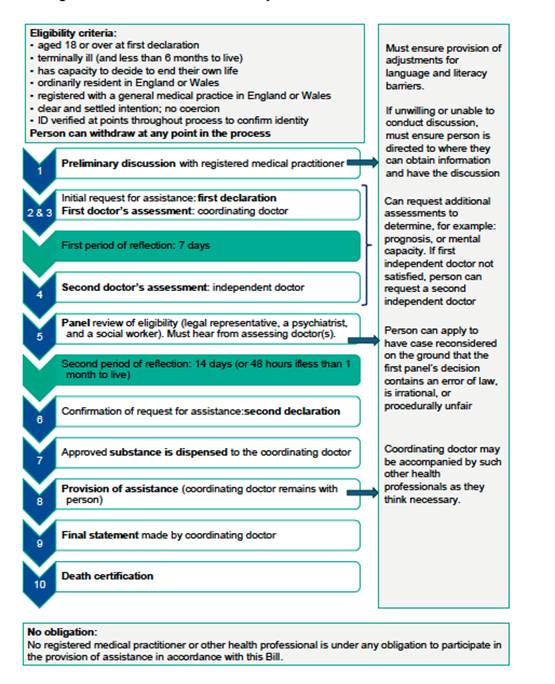
In this article, John-Paul Swoboda KC and Rebecca Henshaw-Keene discuss the current iteration of the Terminally Ill Adults (End of Life) Bill, which was introduced in the House of Commons in October 2024 by Kim Leadbeater (Labour MP for Spen Valley) and completed its passage through the House of Commons on 20 June 2025. It was introduced in the House of Lords on 23 June 2025 and is sponsored in the Lords by Lord Falconer of Thoroton (Labour).
We provide an overview of how the Bill is laid out, and give our thoughts on what we see as the potential contentious aspects of the Bill for personal injury and disease practitioners.
Overview
If passed onto the statute books, the Bill would allow terminally ill adults, subject to safeguards and protections, to choose to request and be provided with lawful assistance to end their own life. As currently drafted, the Bill applies to mentally competent adults (within the meaning of the Mental Capacity Act 2005), aged 18 and over, who are terminally ill and are in the final six months of their life.
The stated policy objectives are:
To give adults who are already dying a choice over the manner of their death;
For this choice to be part of a holistic approach to end-of-life care;
To create a robust legal framework for this provision;
To protect individuals from fear of and actual criminalisation where they provide such assistance in accordance with the provisions of the Bill.
The Bill was introduced on 5 September 2024, after the Private Members’ Bill Ballot. The Bill’s Second Reading was on 29 November 2024, meaning there was about 2 months to instruct a drafter to formulate the Bill.
The Government have since published Equality Impact Assessments and memoranda on human rights in June of this year.[1]
Background to the Act
At present it is a criminal offence to intentionally encourage or assist the suicide (or attempted suicide) of another person (Section 2(1) of the Suicide Act 1961).
Prosecutions under this offence are rare. In the 15 years up to 31 March 2024, 187 cases were referred to the CPS, of which 6 are ongoing.[2] A doctor commits no offence when treating a patient in a way which hastens death, if the purpose of the treatment is to relieve pain and suffering.
Conversely, a person who provides assistance to another in accordance with the Bill would not face any criminal (or civil) liability. The Section 2 offence would continue to apply to assistance falling outside the framework in the Bill.
The House of Lords and the Supreme Court have considered whether the present state of the law of England and Wales relating to assisting suicide infringes the European Convention on Human Rights (“the Convention”).
In R (Pretty) v Director of Public Prosecutions [2002] 1 AC 800, Mrs Pretty argued that the refusal of the Director of Public Prosecutions to grant her husband immunity from prosecution if he assisted her in killing herself and/or that the prohibition on assisting suicide in section 2 of the 1961 Act violated her rights under Articles 2, 3, 8, 9 and 14 of the Convention. The House of Lords held that her desire to end her life did not engage her rights under those Articles, and that Parliament had justified the existing law and the application of it.
Mrs Pretty was partially successful on appeal to the European Court of Human Rights (“the ECHR”). In Pretty v United Kingdom (2002) 35 EHRR 1, the ECHR found that her desire to end her life did engage Article 8.1. The ECHR has since gone on to find in subsequent cases that Article 8.1 encompasses the right to decide how and when to die, and in particular the right to avoid a distressing and undignified end to life (provided that the decision is made freely). [3]
However, interference with Mrs Pretty’s rights under Article 8.1 were justified by Section 2 of the Suicide Act 1961 which was “designed to safeguard life by protecting the weak and vulnerable and especially those who are not in a condition to take informed decisions against acts intended to end life or to assist in ending life”. The blanket ban on assisted suicide was not therefore disproportionate and the DPP had sufficient flexibility not to bring a prosecution. Interference in Mrs Pretty’s case was justified as necessary: both in a democratic society and for the protection of the rights of others.
In R (on the application of Nicklinson and another) (Appellants) v Ministry of Justice (Respondent) [2014] UKSC 38 (“Nicklinson”), a panel of nine Justices reconsidered the law’s compatibility with the Convention. It is a complex judgment. Of the five Justices who found the Court had a constitutional authority to make a declaration that the general prohibition on assisted suicide in Section 2 of the 1961 Act was incompatible with Article 8 of the Convention, only two Justices would have done so. Four Justices found that Parliament was inherently better qualified than the courts to assess these issues, and that under present circumstances the courts should respect Parliament’s assessment.
The Bill
Clause 2 defines a terminal illness as a progressive illness or disease that cannot be reversed by treatment and can reasonably be expected to lead to death within six months. The act of voluntarily stopping eating or drinking would not qualify a person as terminally ill under the Bill. A person would not be considered terminally ill only because they had a disability or mental disorder.
Clause 5 covers preliminary discussions about assisted dying. Whilst no registered medical practitioner is under any duty to raise the subject of the provision of assistance in accordance with this Act with a person, there is no prohibition on the medical practitioner exercising their judgment as to when it would be appropriate to do so. I.e., the subject of assisting dying need not be raised only by the terminally ill person.
Clauses 8 and 13 explain that the person who wishes to be provided with assistance to end their life must make two declarations. The first declaration is witnessed by the “coordinating doctor” who must then carry out an assessment under Clause 10. The coordinating doctor must have had training in assessing capacity, the potential for coercion, reasonable adjustments for autistic people and people with a learning disability, and domestic abuse.
The person must meet the following requirements at this stage:
(a) is terminally ill,
(b) has capacity to make the decision to end their own life,
(c) was aged 18 or over at the time the first declaration was made,
(d) is in England and Wales,
(e) is ordinarily resident in England and Wales and has been so resident for at least 12 months ending with the date of the first declaration,
(f) is registered as a patient with a general medical practice in England or Wales,
(g) has a clear, settled and informed wish to end their own life, and
(h) made the first declaration voluntarily and has not been coerced or pressured by any other person into making it.
If the coordinating doctor is satisfied that these requirements are met, the person must be referred to an ‘independent doctor’ who must assess the same requirements (save for those about residency).
Clause 12 sets out that both doctors must examine the person’s medical records and explain treatment options and any available palliative, hospice or other care that may be available, including symptom management and psychological support. They must also explain the process of administering the substance which will assist the person to end their own life. They must make referrals for assessment on diagnosis of the terminal illness or capacity if they are in any doubt.
Clause 16 sets out a referral to a multidisciplinary panel. The panel must hear from, and may question, the coordinating doctor and/or the independent doctor, and may hear from the individual. They may also question ‘any other person’. Any of this communication may take place on video link or audio link, including with the individual. There must be exceptional circumstances not to hear from the individual. Where the panel refuses to grant a certificate of eligibility in respect of the person, the person may appeal to the Voluntary Assisted Dying Commissioner. Such an application can only be made once. The Commissioner must hold (or have held) office as a judge of the Supreme Court, Court of Appeal, or High Court. The Bill does not include any provisions to appeal the decision of the Commissioner.
Clause 25 is entitled ‘Provision of assistance’ and sets out the provision of ‘approved substances’ directly to the individual. It says this:
(4) When providing a substance under subsection (2) the coordinating doctor must explain to the person that they do not have to go ahead and self-administer the substance and that they may still cancel their declaration.
….
(7) An approved substance may be provided to a person under subsection (2) by—
(a) preparing a device which will enable that person to self-administer the substance, and
(b) providing that person with the device.
In the case of an approved substance so provided, the reference in subsection (3) to the approved substance is to be read as a reference to the device.
(8) In respect of an approved substance which is provided to the person under subsection (2), the coordinating doctor may—
(a) prepare that substance for self-administration by that person, and
(b) assist that person to ingest or otherwise self-administer the substance.
(9) But the decision to self-administer the approved substance and the final act of doing so must be taken by the person to whom the substance has been provided.
(10) Subsection (8) does not authorise the coordinating doctor to administer an approved substance to another person with the intention of causing that person’s death.
Clause 22 mandates that the Secretary of State must appoint independent advocates to provide support and advocacy for people with a learning disability, a mental disorder (as under Section 1 of the Mental Health Act 1983) or autism, who are seeking to understand options around end of life care, including the possibility of requesting assistance to end their own life.
Discussion
There are a number of clauses which appear pertinent to personal injury lawyers.
The first is, of course, how terms in the Bill will be defined. The Bill seemingly imports the phrase “clear settled and informed” regarding the wish to end one’s own life from the DPP’s Policy for Prosecutors [4] but is otherwise undefined, either in the Bill or in that Policy.
Also preserved in the act is the concept of personal autonomy, as is seen in Clause 25(10) above. Nicklinsonprovides some assistance in understanding what personal autonomy may mean in this context.Lord Neuberger commented that: “I believe that there may be considerable force in the contention that the answer, both in law and in morality, can best be found by reference to personal autonomy. … it seems to me that if the act which immediately causes the death is that of a third party that may be the wrong side of the line, whereas if the final act is that of the person himself, who carries it out pursuant to a voluntary, clear, settled and informed decision, that is the permissible side of the line.” [95].
Likewise, there was support in Nicklinson that a system whereby a judge or other independent assessor was satisfied in advance that someone has a voluntary, clear, settled and informed wish to die and for his or her suicide then to be organised in an open and professional way would arguably provide greater and more satisfactory protection for the vulnerable, than a system which involves a lawyer from the DPP’s office inquiring, after the event, whether the person who had killed himself or herself had such a wish.
Clause 31 (1) operates as a “conscience clause” stating that “No person is under any duty to participate in the provision of assistance in accordance with this Act”. Specific provisions in Clause 31 provide clarification for health professionals, but for no other class.
For personal injury and disease practitioners, an example of the advice required (although by no means a simple one) is a client who may meet the eligibility criteria of the Act and seeks to understand the impact this would have on their civil claim for damages both in life and in the ‘lost years’.
Clause 38 proposes an amendment to the Coroners and Justice Act 2009, excluding “a death caused by the self-administration by the deceased of an approved substance” from the definition of an “unnatural death”. Whilst a Coroner currently has a duty to investigate suicides as they are deemed “unnatural deaths”, they would have no duty to investigate assisted dying as a matter of course.
His Honour Judge Teague KC, former Chief Coroner, has commented: “The effect of cl 35(1) is thus to exclude assisted deaths from the posthumous judicial scrutiny that all other intentionally procured fatalities automatically attract. This represents a momentous change in the law of England and Wales. Even in the days of capital punishment, coroners were required to conduct inquests into deaths resulting from the lawful execution of judicial sentences.”[5]
As HHJ Teague KC has said, the multidisciplinary panels themselves will not be judicial bodies and cannot diminish the risk of wrongdoing at later stages in the process. The Coronial postmortem may be a definitive way of determining whether the diagnosis of terminal illness was a reasonable one, or that the requirements of Clause 25 were adhered to. This may become a significant issue: the Government’s impact assessment has estimated that by 2038 there will be over 7,000 applications under the Act, and almost 5,000 deaths a year. [6] Lord Falconer’s explanatory notes to the Lords state that nothing in this Clause prevents anyone from referring a death to the Coroner where they have concerns that the death has not occurred in line with the provisions of the Bill. Deaths which are not investigated by a coroner are instead scrutinised by a medical examiner.
A comparison can be made by the eligibility criteria in the Bill (above) and those proposed by Lord Wilson in Nicklinson at [205]. In the Bill, the ‘gateway’ provision appears to be the diagnosis of a terminal illness with a life expectancy of less than 6 months. Whilst those engaging with the individual under the Bill must explain to them appropriate palliative, hospice or other care, and offer to refer them to a practitioner who specialises in such care for the purpose of further discussion, Lord Wilson’s list of factors is arguably more holistic.
That being said, Clause 39 mandates the Secretary of State to provide a code of practice on the assessment of the individual’s intention to end their own life and on the information which is made available as mentioned in sections of the Bill on treatment or palliative, hospice or other care available to the individual.
Summary
The Bill has passed its second reading in the House of Lords. After the second reading the Bill goes to committee stage – where no doubt a detailed line by line examination and discussion of amendments will take place. It is therefore likely there will be more changes to the Bill before it is finalised.
These are our thoughts having read the Bill and some of the wide-ranging debates on this sensitive and complex topic. The Bill is not in its final form and all commentary is current as at 22.09.2025. We will update this blog with any major changes.
The following graphic may be useful.
Taken from the Government’s Impact Assessment dated 14.5.2025
[2]Commons Library Research Briefing, 22 November 2024
[3] See the summary of the development of domestic and European jurisprudence in Lord Neuberger’s judgment in R (on the application of Nicklinson and another) (Appellants) v Ministry of Justice (Respondent) [2014] UKSC 38 (“Nicklinson”) at [21] – [43].
Steven Snowden KC, John-Paul Swoboda KC and Helen Waller of 12KBW acted for the appellants in Alexander Johnstone (Personal Representative of the Estate of Elaine Johnstone, Deceased) and Fawcett’s Garage (Newbury) Limited.
The Court of Appeal has handed down judgment in this case addressing the material increase in risk of contracting mesothelioma.
Elaine Johnstone was exposed to asbestos while working at Fawcett’s Garage over a period of around 7.5 years. She contracted malignant mesothelioma in 2018 and, sadly, passed away in 2019.
At first instance, H.H.J. Simon, sitting as a High Court Judge, found that her exposure to asbestos was at such low levels of chrysotile that the risk of Mrs Johnstone contracting mesothelioma had not been materially increased by the admitted breaches of duty.
The appeal, brought by Mr Johnstone, was dismissed.
First instance decision
H.H.J. Simon found that:
The Garage’s mechanic (who provided the only factual evidence relevant to exposure, read at trial) was exposed to around 1.0 fibres per ml of air per year (fb/ml-y) of chrysotile asbestos.
Mrs Johnstone’s exposure was around 0.001 – 0.002 f/ml-y as she worked primarily in an office, across the yard from the mechanic’s bay.
Given background levels of asbestos, this exposure increased the risk of contracting mesothelioma by “0.1% or less”, which was not a material increase.
Appeal
There were five grounds of appeal; four of which concerned the way in which H.H.J. Simon calculated the increase in risk of mesothelioma; one argued that adverse inferences from the failure to obtain and keep air monitoring records should have led to the claimant’s expert evidence on dose being accepted.
The Garage also submitted a Respondent’s Notice which sought to support the Judge’s decision by reference to the approach in Bannister v Freemans Plc [2020] EWHC 1256 (QB).
In a joint judgment, Coulson, Nicola Davies and Zacaroli LJJ’s held:
There was no error in H.H.J. Simon’s rejection of the adverse inference argument. There was insufficient evidence that the obligation applied; in any event, adverse inferences cannot require a judge to ignore factual findings properly made. In this case, the Court was not balancing opposing witnesses (one side having been hampered by another’s failure to provide relevant evidence or documents) but was analysing uncontested factual evidence with the help of expert evidence.
The judge was entitled to use the ‘direct risk assessment’ approach on the evidence heard, extrapolating the risk of mesothelioma from occupational vs background risk, from the Hodgson & Darnton study. The evidence of the epidemiologist called on behalf of the claimant (Prof. Norrie), in context, was not as dismissive as suggested on appeal.
The Judge’s calculation of the background risk contained an error but this did not affect the overall conclusion that increase was ‘less than 0.1%’. The court should not take the most favourable part of the ranges of occupational and background risk to arrive at the figure for increase.
There was no error of law in accepting the direct risk assessment approach. The caution about use of statistics in Sienkiewicz v Grief (UK) Ltd[2011] UKSC 10 applied to cases decided on ordinary ‘but for’ principles of causation; and the defendant was not required to bear all consequences of evidential difficulties and uncertainties. The Judge’s decisions on relative risk were open to him.
The judge did decide to accept the defendant’s approach to risk; there was no failure to make a decision or provide reasons.
Comment
At the heart of the appeal was the judge’s assessment of the increase in risk of mesothelioma caused by the low dose of exposure.
The claimant had argued that occupational exposure should be compared to background or environmental exposure and if it was a more than minimal increase, a material increase in the risk would be established. This was referred to as the ‘exposure/risk approach’ on appeal.
The defendant had argued that the Hodgson & Darnton model could be used, with evidence from Peto and Rake on the background risk of mesothelioma, to assess the risk of contracting mesothelioma at various levels of exposure.
It also sought to support the assessment of risk approved in Bannister – that a material increase in risk is one which an appropriately qualified doctor would regard as medically significant (referred to as the ‘absolute risk approach’).
The significant consequences of the appeal decision are:
Direct risk assessment, and reliance on Hodgson & Darnton, is a permissible method of evaluating material increase in risk of mesothelioma in low exposure cases. The Court of Appeal found there was no error in principle or in assessing the evidence produced in the Judge’s decision.
The Court of Appeal was explicit in stating that the appeal “is not about deciding whether the direct risk assessment approach is, generally, a valid and appropriate method.” The appeal was concerned with the Judge’s decision and its validity.
In litigating cases involving low dose exposure, it will still be open to claimants to argue that material increase in risk is established using an analysis of exposure and risk or to challenge the use of Hodgson & Darnton. They will have to assess the risks of doing so in light of support for direct risk assessment provided in Johnstone.
The Court of Appeal did, however, rule out use of the absolute risk approach. This delegates assessment of materiality to a medical expert (as argued by Mike Rawlinson KC of 12KBW here shortly after Bannister was decided). The example given in the judgment is an increase from a 0.1 in 100,000 chance of contracting mesothelioma to 0.9 in 100,000 by tortious exposure. This would be a nine-fold increase but still considered a medically insignificant chance overall. Unequivocally, the conclusion was that “we do not accept the absolute risk approach is appropriate in cases where the court is required to assess the material increase in risk of a claimant contracting mesothelioma.”
Unlike the decision on the appeal grounds (explicitly phrased as not determining the validity of the approach to causation), the decision on the Respondent’s Notice is in terms that apply to all mesothelioma claims and bind first instance Courts.
Just before the summer break Mrs Justice Hill handed down judgment in an application where four claimants (two living mesothelioma and two fatal mesothelioma claims) sought an order that their claims be consolidated and tried on liability together. This was sought, and granted pursuant to CPR 3.1(2)(g).
The claims are all product liability cases brought against Cape. The Claimants allege that Cape owed a duty as they were selling an inherently dangerous material, namely Asbestolux. This was, or ought to have been, known to Cape because of its superior knowledge, as well as the general understanding of the dangers of asbestos at the times material to the claims. Further, it is the Claimants’ case that Cape Intermediate Holdings Ltd owed a duty because of the control it had over its subsidiary companies (as has been decided in an employer/employee context in Chandler v Cape Plc[2012] EWCA Civ 525 but not in a product liability context). The alleged breach of the duty is put in several ways, including the failure by the Defendant, as manufacturer, to sufficiently warn of the dangers in using Asbestolux.
Section 49(2) of the Senior Court Act 1981 states Courts shall, “as far as possible” avoid a multiplicity of legal proceedings. The Court considered this in the light of Harrington v Mehta[2023] EWHC 998 (Ch) where Miles J set out various factors the Court should consider in deciding whether to consolidate proceedings.
The Claimants were successful in their application for consolidation. Consolidation was made on the basis that there was an overlap of facts and issues; there was a risk of inconsistent findings without consolidation; multiple proceedings would be more costly and create delay; it was not too late to achieve consolidation. It was noteworthy that there were the same solicitors in each case for the claimant and defendant.
Whilst there have been previous product liability cases brought against Cape none have yet made it to a contested trial. Given that the dates of exposure in Wormleighton (1961-1963) pre-date the 1965 ‘watershed’ these claims may also provide the Court with an opportunity to consider whether the same approach for pre-1965 cases should be used in a product liability case as in employers liability cases (cf. Cuthert & White v Taylor Woodrow Construction Holdings and anor[2024] EWCA Civ 244). This may well depend on whether Cape had a superior knowledge of the dangers of asbestos in its role as a leading player in the asbestos industry.
This is a case to watch, should it remain contested at trial. It has been listed for January 2025.
The judgment from November 2023 (in which the Claimant was ultimately successful) provides a helpful insight into addressing conflicts between medical notes and witness evidence in industrial disease cases. As is sometimes the case, the clinical notes contained limited, conflicting accounts of exposure and a repeated positive assertion that the deceased “did not work with asbestos“. The judgment also touches upon a possible interpretation of ‘substantial quantities’ of dust for liability under the second limb of s.63(1) of the Factories Act 1961.
Background
Mr Dean worked for the Defendant from 1959 to 1972 as an apprentice loom turner, maintenance officer, and a foreman. Mr Dean was exposed to asbestos dust between 1964 and 1972 while inspecting and working on an air compressor near a boiler insulated with asbestos-containing lagging. Mr Dean passed away in 2020 due to mesothelioma. His widow, acting as executrix of his estate, filed a claim in 2021 alleging breach of common law negligence and breach of s.63(1) of the Factories Act 1961. Quantum was agreed at £200,000, subject to liability.
The evidence
Mr Dean’s witness statement was taken and finalised before his passing. There was no lay or documentary evidence from the Defendant. Mr Christopher Chambers, a health and safety expert, provided evidence for the Claimant. Mr Graham Glenn, an engineering expert, gave evidence for the Defendant.
The clinical notes and the reliability of Mr Dean’s recollection
The Defendant relied on various entries in the deceased’s clinical records to suggest that he had no reliable recollection of any asbestos exposure; these were:
2019 GP entry referring to “no asbestos exposure“, which was passed on in the lung cancer referral form as “Never knowingly been exposed to asbestos“. The chest physician responded, “Ex-engineering, no asbestos“.
2019 entry, “He has no known exposure to asbestos“.
A CT scan report stating, “there is no evidence of previous asbestos exposure“.
August 2019 entry stating that he did not recollect any exposure but had worked as an engineer and had been in places where there could have been potentially asbestos.
August 2019 note stating that he had worked in the Navy and had been referred for possibly making a compensation claim.
August 2019 oncology note which read: “Boiler in the first role probably had asbestos“. The words “may have” had been crossed out. There was a further reference to Mr Dean having worked in various jobs “Through the 50s, 60s and 70s with potential exposure to asbestos, although nothing he can clearly identify“.
Mr Dean stated, amongst other things, that he was responsible for the compressed air pipework and that the boiler was located next to where he would work. He described the height, its position, and that it was lagged in the same material throughout his employment. He described it “as dusty, plaster-like material that was off-white in colour” and that he “believe[d] that the lagging was asbestos“. He went into considerable detail describing the area and how he would come into contact with the boiler.
HHJ Coe KC, sitting as Deputy High Court Judge, held as follows:
The GP’s note of “no asbestos exposure” was the source of much repetition within the records [52].
Had he been asked if he “had ever worked with asbestos“, then he may very well have answered “no“. Questions asked at that stage would not have been particularly probing [52].
The deceased’s solicitor went through his work history in considerably greater detail than the clinicians would have. “[The clinical notes] do not constitute the sort of detailed exploration of work history that would be taken by a solicitor” [59].
The oncology notes in August stated that the boiler in his first role probably had asbestos and that this was the boiler with which the deceased stated as the source of his exposure [55].
Mr Dean’s diagnosis would “obviously have come as something of a shock and he may not therefore have been concentrating on his employment history” [57].
The reference to Mr Dean working in the Navy was an error. He never worked in the Navy [59].
Although referred to the case of Gestmin v Credit Suisse [2013] EWHC 3560, it was not helpful in terms of any general principle in the case; the present case was not a commercial case with a large volume of documents dealing with liability [61].
Conclusion as to the other issues
Addressing the other issues, the Court made the following findings:
Boiler Protection and Asbestos Content: Based on Mr Dean’s account and expert evidence, the court concluded that the boiler insulation did contain asbestos, which was in line with the period’s practices [75-84].
Exposure to Asbestos: The experts agreed on the nature of the friable asbestos-containing lagging, supporting Mr Dean’s described exposure and the lagging’s condition, further validating his evidence on the exposure’s frequency and nature [89-92].
Nature of Asbestos Dust: It was more probable than not that the lagging contained amosite, with a 15% possibility of crocidolite [96].
Foreseeability of Risk: The Court determined that given the knowledge at the time, the Defendant should have anticipated the risk of asbestos exposure and adopted necessary precautions, especially considering the potential presence of crocidolite [98-100, 133-139].
Level of Exposure Assessment: The concentrations Mr Dean was likely exposed to were significantly above 2 fibres/mm when the dust was disturbed and probably in the region of 50 fibres/mm. The Court expressly rejected attempts by the Defendant to make a precise assessment of the level of exposure, which fell below the hygiene standard at the time. The Judge reiterated [59-60] of Bussey v Anglia Heating [2018] EWCA Civ 243 and the avoidance of following a “bright line” approach to asbestos limits from the time. A more nuanced approach is required. The Court concluded that a reasonable employer would have been aware of the significant risk posed by asbestos exposure from 1965 [140-144].
Precautions Against Asbestos Exposure: The Court found that simple protective measures, such as covering the boiler with sheet metal or asbestos-containing cement, could have prevented Mr Dean’s asbestos exposure entirely [145-147].
S.63(1) of The Factories Act 1961 – The Second Limb: While the Claimant argued for a breach based on the presence of substantial dust, the Court found the transient nature of the dust cloud did not constitute a “substantial quantity” of dust. However, it mattered not as the Defendant was liable under the first limb of s.63(1) of the Factories Act 1961 [148-151].
Comment – The reliability of the deceased’s recollection
In the circumstances, the clinical notes were deemed insufficient for a detailed work history exploration, which reinforced the reliability of Mr Dean’s later, more detailed account.
The reliability of witnesses’ recollections of events from a long time ago has been addressed in several decisions (Gestmin v Credit Suisse [2013] EWHC 3560; Sloper v Lloyds Bank Plc [2016] EWHC 483 (QB)); Kimathi v Foreign and Commonwealth Office [2018] EWHC 2066 (QB); Bannister (Estate of) v Freemans Public Ltd Co [2020] EWHC 1256 (QB).
Whilst those judgments are helpful reminders of what factors may impact the reliably of memory, they are not statements of legal principle (CXB v North West Anglia NHS Foundation Trust [2019] EWHC 2053 (QB) at [40] and Pinnegar v Kellogg International Corp [2020] EWHC 3431 (QB) at [5].
Clinical notes are, of course, generally useful contemporaneous written documents. They may assist in corroborating or challenging the reliability of lay witness evidence in many cases. However, their usefulness should be appropriately weighted and not overstated. It is often unclear what questions were asked of the witness, which can obviously alter the response.
Questions are often asked in circumstances of considerable shock or anxiety involving a diagnosis of a serious disease. Further, the sort of probative questions asked for the purposes of a 10-minute assessment in a clinical setting will not be the same as the rigorous fact-finding that a solicitor may do with their client.
Comment – “Substantial quantities” of dust and the second limb of s.63(1) of the Factories Act 1961 (‘the 1961 Act’)
s.63(1) of the Factories Act 1961 establishes that an employer may be liable under that section of the 1961 Act in two circumstances (set out in two limbs of s.63(1) of the 1961 Act). The first is where the dust given off was of such quantity and character that it was likely to be “injurious or offensive” to persons employed. This imports foreseeability of harm by reference to the knowledge at the time.
The second set of circumstances are where the dust was of a “substantial quantity”. The second limb of s.63(1) of the 1961 Act does not require any element of foreseeability. Both limbs require that employer must take all practicable measures to protect from both inhalation and accumulation.
s.63(1) of the 1961 Act, which repeats s.47 of the Factories Act 1937, was addressed in detail in the Supreme Court in McDonald v National Grid Electricity [2014] UKSC 53. The Supreme Court concluded that when assessing whether there has been a substantial quantity of dust, the relevant period is when the dust was produced, not when the dust was inhaled (McDonald at [76]). Further, the assessment as to the second limb is purely quantitative assessment (McDonald at [86]).
The absence of any requirement for foreseeability elevates the importance of a definition of “substantial quantity”. In Prater v British Motor Holdings Ltd [2016] 6 WLUK 193, the judge concluded that, on the facts of that case, that the claimant had shown there to be a substantial quantity of dust where it included:
“[dust which] was in such quantities as to be visible in the air, including as a haze or smog, and to fall on the skin and down the neck and onto the clothing in such quantities as to require shaking to remove it, and for it to be necessary to be brushed off from the work benches and from the floor”.
This was a finding of fact and not a conclusive definition. What is sufficient to amount to a “substantial quantity” of dust has included:
When there were “clouds of dust” or “lots of dust” (Bailey v Reed Corrugated Cases Ltd [1993] Lexis Citation 3976);
When the dust was such that the “the atmosphere was cloudy” and “[…] was pretty thick” (Brooks v J&P Coates (UK) Ltd [1984] I.C.R. 158, 170);
When there was a “considerable quantity of dust” (McDonald at [76]).
In Dean v Armstrong Oiler Company Ltd, HHJ Coe KC held at [151] that:
“the cloud of dust described by the deceased does not equate to a “substantial quantity” of dust within the meaning of the statutory provision. I make that finding because this was a transient cloud of dust and not a quantity of dust, which hung in the air or which was such as to create a smog or haze of the kind described in the case of Prater or in other similar decisions.”
On the one hand, it may be suggested that this limits the scope of “substantial quantity”. However, it is merely a finding of fact. The reference to the “transient” cloud of dust not being substantial is also possibly misleading. One can envisage a situation where a substantial amount of dust (which creates a cloud) is produced in a very short (transient) time frame but would still be sufficient to engage the second limb of s.63(1) of the 1961 Act. Finally, narrower definitions are seemingly at odds with the approach of the Supreme Court in McDonald, which called for a broader, generous approach when interpreting health and safety legislation (McDonald at [66]).
Conclusion
The decision, whilst not setting a new precedent, is a helpful reminder to consider the circumstances which may prompt a conflicting medical note and not to elevate such inconsistency to too great a height. The decision is a further reminder of the difficulty of assessing the meaning of “substantial quantity” for the purposes of the 1937 and 1961 Factories Acts.
As I settled down last Saturday evening to read the judgments in this case I did not think I’d be up until 1am. But I was. That is not only because of the length of the judgment but also because of its content. The Court of Appeal has re-cast/re-stated (depending on your point of view) the foreseeability requirements for pre 1965 exposure and may also have re-ignited a foreseeability debate for post 1965 exposure. If there is a silver lining for claimants perhaps it is this: the decision may make it harder for Defendants to successfully run the causation arguments which are a la mode.
The context
The central issue in the case was whether the Judges in Cuthbert and White had applied the right test of foreseeability in deciding whether or not the employers owed a duty. Stuart-Smith LJ gave the lead judgment with whom Newey LJ and Underhill LJ agreed (with Underhill LJ giving a short concurring judgment).
To put the Court’s findings in context it is worth considering what the exposure (as found by the trial judges) was in White and Cuthbert. Mr White was exposed to asbestos in Sefton General Hospital in Liverpool. He was exposed from 1949 to 1960 and from 1973/74 to 1991/92 with the first period being said to be “intermittent and in very low quantities” and “de minimis”; as a junior lab technician he used asbestos millboard Bunsen burner mats which were soft and friable. The second period was found at trial (and not appealed) “to be insignificant in causal terms”. Mr Cuthbert’s exposure occurred between 1956 to 1959 and, as the trial judge found, arose from “irregular and intermittent contact” with carpenters on site sawing Asbestolux such that his exposure was “of a low order, light and intermittent.”
What risk could be foreseen from exposure to asbestos (1928 to 1985)?
Against this context Stuart-Smith LJ undertook a 77 paragraph review of the contemporaneous literature as to what was known about the risks of asbestos between 1928 and 1985, but with a focus on the pre-1965 period. He set out 8 propositions which he said could be drawn from the literature. He found, the known risks from the inhalation of asbestos until the 1960’s were asbestosis and (post 1955) lung cancer and that the risk “was thought to arise on what would now be regarded as substantial exposure to asbestos”. He found there was believed to be a level of exposure “below which there was no real risk of contracting disabling asbestosis” (the threshold or “dust datum”). There was a “sea-change” after 1960 and the perception of risk dramatically changed post 1965. The repeated reference to “MCPs, TLVs, and enforcement levels, while not providing a bright line, general yardstick or universal test for determining the issue of foreseeability, are evidence that there had been and continued to be an understanding that exposure to asbestos below certain levels was safe.” In other words, if the claimant cannot prove the exposure was greater than a subsequent enforcement level (think TDN 13) this would (or may) be evidence that the exposure level would not have been deemed unsafe which judged by the standards of the day.
What level of exposure posed a foreseeable risk pre-1960’s?
Stuart-Smith’s found that “It is not, and never has been, the law that a person is obliged to take all possible steps to prevent the occurrence of a risk that is not reasonably foreseeable…”. In other words, context is everything and the pre1960/65 context is that the risk of mesothelioma arising from slight exposures was unknown.
On this basis, Buxton J’s dictum in Owen v ICI (High Court) that an employer in 1951 was “under a duty to reduce exposure to the greatest extent possible” was “ill-founded” in so far as went beyond the risk which were reasonably foreseeable at the time (asbestosis). It should not, said Stuart-Smith LJ “be accepted as creating any form of precedent”. Further Hale LJ (as she then was) in Jeromson did not rely upon this finding to justify low or intermittent exposure as constituting a breach (as in both Owen and Jeromson the exposure was heavy or substantial exposure) and neither did Hale LJ unequivocally endorseBuxton’s J finding. Further Stuart-Smith LJ found that Jeromson was not a test case so as to bind the decision on this case. Finally if Jeromson was decided only on the basis of the literature cited it was not comprehensive (or not as comprehensive as Stuart-Smith’s consideration of the literature).
However, as Stuart-Smith LJ noted, in Maguire Longmore LJ considered himself bound by Jeromson to proceed on the basis that as between employer and employee, the employer will be in breach of duty if he fails to reduce his employee’s exposure “to the greatest extent possible” (i.e. the finding in Owen which on one reading Hale LJ endorsed in Jermoson). On this basis Longmore’s judgment had treated the decision in Jermonson to accept Buxton’s dictum in Owen as binding. However, Stuart-Smith LJ noted Longmore LJ did not identify the date from which that conclusion must apply. In any event Stuart-Smith (and the other members of the Court) found Judge’s LJ findings (that there could be no foreseeability of overalls exposure pre 1965) was “inconsistent with any blanket acceptance of Buxton J’s dictum in Owen.” Ergo Maguire could not confirm Buxton’s dictum as binding precent as the decision in Maguire was incompatible with it. This does not however resolve the apparent tension with Longmore’s position as stated above.
What this means, to use Underhill LJ’s language, pre-1965 low or occasional levels of exposure to asbestos will probably not have given rise to foreseeable injury. Of course, what amounts to low or occasional exposure remains up for debate but clearly the closer one can get to the exposure in Jermonson or Owenthe more likely it is to be viewed as exposure giving rise to foreseeable injury (as there was endorsement that Jermonson was correctly decided and no suggestion Owen was not correctly decided).
Analysis of the decision
The arguments which may be made against this decision are as follows.
The Court ran roughshod over binding authority from a Court of coordinate jurisdiction. To find that Jeromson proceeded only on the facts of that case ignores that Buxton J’s findings was endorsed by the trial judge and there was no criticism or reversal of that finding by Hale LJ. To find the reasoning in Maguire (no overalls claim pre 1965)is inconsistent with Buxton J’s finding is to ignore that Longmore LJ considered himself bound, viz-a-vie employer/employee and to say that the decision in Maguire was incompatible with Buxton’s dictum is to ignore that Maguire was concerned with an overalls exposure (i.e. not an employer/employee situation).
The Court did not deal with the argument accepted by Hale LJ in Jeromson that an employer cannot assume future employers will not expose a claimant to asbestos so one period of exposure cannot be taken in isolation. This may be said to undermine the dust datum or threshold reasoning in the judgment. Taken further it may be said to undermine the very premise that there was a safe level of exposure; it might be safe in isolation but not cumulatively and no reasonable employer could assume the employee had not been or would not in the future be exposed to asbestos.
The Court has assumed that there was with the passage of time an increasing level of awareness of the dangers of asbestos such that later threshold levels may inform whether there was an earlier breach. This fails to acknowledge the stochastic nature of the development of knowledge. Knowledge of risk was not a smooth gradient, arguably not even always in one direction (i.e. greater perception of risk), because of a) industry lobbying (think of the concerted campaigns by the asbestos industry) or b) scientific development (think of the differentiation between different fibre types and the ongoing debate).
Post-1965 exposure
In the context of pre-1965 exposure Stuart-Smith LJ found that what comes after the date of exposure “is relevant to any consideration of what … levels of exposure were or had been considered to be acceptable” and also that it was ok to draw some support between the disparity between subsequent enforcement levels and the actual levels of exposure found. That is exactly the argument which was regularly ran, pre Bussey, in respect of post 1965 exposure and the TDN13 enforcement levels. The decision in Bussey appeared to disapprove of this approach, but the practice was (and is) still commonly adopted by Defendants. In my view the decision in White and Cuthbert is likely to encourage further arguments about enforcement levels in the period post 1965. Whether such arguments have merit or not is likely to be a battleground.
Causation – the silver lining
It is clear from the Stuart-Smith’s judgment that to establish breach (whether in negligence or a statutory duty which incorporates foreseeability) once must prove the employer ought reasonably to have foreseen the risk of (in post 1960/5 exposures) mesothelioma. This highlights the link between the question of breach and causation. If one proves breach, it ought to be easier to prove causation: if the employer should have foreseen risk of mesothelioma (post 1960/5) it may be said to be implicit that the exposure must materially increase the risk of mesothelioma. The apogee of this reasoning was expressed by Stuart-Smith LJ who stated, “it is now generally recognised any exposure to asbestos carries with it a significant risk of personal injury.” If Stuart-Smith’s comment is correct the increasingly prevalent argument that the exposure (in any given case) was so small as to constitute a de minimis risk is wrong: any exposure to asbestos carries with it a significant risk. However, one can easily imagine contextual arguments against such a proposition (Stuart-Smith was not determining a case on causation; the proposition fails to take into account relative risk which is important as causation is proved by demonstrating an increase in risk; in White it was accepted that there was a non-causal period of exposure). In other words, the above comment by Stuart-Smith may be helpful but is unlikely to be a silver bullet in respect of the causation arguments which are a la mode.
The final word
For pre-1960/5 claimants to succeed in negligence or for a breach of statutory duty which does not incorporate foreseeability, it will be necessary to show the exposure was more than low or occasional. Those are terms of art and there is likely to be argument around those terms. However, on the basis of Stuart-Smith’s judgment later enforcement levels may be taken as evidence on the issue of whether the exposure was low of occasional.
It is worth noting, neither White nor Cuthbert concerned a statutory duty where foreseeability was not incorporated (such as the s47 of the FA 1947 – “substantial/ offensive quantity of dust”). The importance of such duties in a pre 1965 context is, in my view, heightened.
In this article Cressida Mawdesley-Thomas considers the judgment of HHJ Lickley KC in Ness v Carillion Capital Projects Ltd & Ors [2023] EWHC 1219 (KB). Ness was a successful fatal mesothelioma claim.
The Issues
The central issues were: (1) did the deceased work with asbestos millboard? (2) even if he did not work with asbestos millboard was his exposure from asbestos cement sufficient to establish breach of duty where the exposure was over 10 to 14 days between 1966 and 1968?
The defendant’s case was that Mr Harrison’s (‘the deceased’) exposure from asbestos cement was de minimis and the guidance at the time did not mandate precautions where exposure was limited and sporadic. However, the defendant accepted that they would have difficulty defending liability if the court found that the deceased also worked with asbestos-containing millboard for 10-14 days in 1966-1968.
Background
The deceased worked for Bovis on the construction of the Guardian Insurance building in Blackpool as a specialist joiner, installing insulation and panels beneath windows. He used a handsaw to cut the insulation and paneling to size and only worked inside. It was not disputed that he used asbestos cement for around 10-14 days to do this work between 1966 and 1968. However, it was disputed that he also used asbestos containing millboard. It was agreed that at the relevant time some millboard contained asbestos, and some did not.
Did the millboard contain asbestos?
The court was not persuaded that the millboard contained asbestos. The Claimant faced a number of difficulties:
The Claimant’s occupational hygienist, Laura Martin, based her view that the millboard contained asbestos on the fact that when she interviewed the deceased, she showed him photographs of products and he had identified to her asbestos containing millboard as that which he worked with. However, those photos were not indexed and exhibited to her report and there were no agreed photos before the court.
The second report of Laura Martin, wherein it was stated that the deceased was exposed when working for Bovis with asbestos millboard was produced when she only had the deceased’s first statement (which did not mention working with asbestos-containing millboard) and when she had not undertaken a further interview with the deceased.
Neither the first statement of the deceased (July 2017) nor the first report of Laura Marin (also July 2017) mentioned the deceased being exposed to asbestos during the course of his employment with Bovis. Nor was Bovis mentioned as an employer who exposed the deceased to asbestos in his applications to the DWP. Further, it was only in the deceased’s November 2018 statement that the millboard was prefixed with ‘asbestos’.
The deceased described the millboard in contradictory terms which often better aligned with non-asbestos containing millboard (Martin Stear’s evidence was that brown millboard that could be broken very easily was likely to be non-asbestos containing). For example, in the July 2018 engineering report and his second statement dated August 2018 the deceased described the Millboard as being “brownie”. However, when he gave evidence by deposition in July 2019 he variously described the asbestos millboard as: “pretty hard stuff”; “quite hard but could be cut with a saw” and at other times as “very soft”. In April 2019, in response to the defendant’s part 18 questions he said that the asbestos millboard was light grey in colour, quite hard but could be cut with a saw.
Conclusion – Not Asbestos Millboard
The judge concluded that he could not be satisfied on the balance of probabilities that the millboard contained asbestos for 10 reasons, in summary: initially there was no suggestion that Bovis exposed the deceased to asbestos; there is no explanation where the information came from to suggest exposure to asbestos millboard in the second engineering report; the deceased’s august 2018 witness statement describing the millboard was at odds with the description in Laura Martin’s report; the millboard was first described as browney which suggests it did not contain asbestos; the part 18 responses and evidence on commission gave confused descriptions about the millboard; there were no contemporary records; overall the evidence was contradictory and unpersuasive.
The Legal issues
What Was Known
It was found as fact that the deceased would have to handle, then cut the asbestos cement panels to size with a saw and fit them to the building under construction. The dust and debris that his work produced was brushed to one side by him to be removed. He did that work for 10-14 days between 1966/67 and 1967/68.
To determine whether this work was in breach of duty the court examined the degree of knowledge and understanding of the risks in 1966/67.
It was noted that regulation 63 of the Factories Act 1961 required all practicable measures to be taken to protect employed persons against the inhalation of injurious dust, following the Chief Inspector of Factories’s Annual Reports of 1949 and 1956. The Judge also noted:
“It is clear that by the mid 1960s, there was an increased awareness of the risks to health posed by exposure to asbestos.”
It was also noted that in 1965 Newhouse and Thompson published their findings that established that mesothelioma could be caused by low level exposure and that might affect the families of workers and that this information was widely disseminated in the Sunday Times in the same year.
The judge was also referred to ‘The Asbestos Research Council Recommended Code of Practice’ (‘the code’) which was issued in April 1965. The code made specific reference to the handling, working and fixing of asbestos and asbestos cement products in the building and construction industries. The preamble stated (emphasis added):
“The use and manipulation of asbestos and asbestos cement products is very diverse […] special precautions are only necessary when there is a possibility that operatives may inhale asbestos dust as result of proximity to cutting grinding or similar operations.”
The code of practice also provided:
“3.2.1 where hand cutting and working has to take place regularly a dust exhaust system will often not be possible. Where any risk of inhaling asbestos dust is present operatives should wear approved type respirators.”
Other precautions are then set out in the code, including damping down etc. It was noted that there were steps Bovis could have taken, such as damping down, but that they did not take these steps.
The Legal Test
The Judge reminded himself of the test as formulated by Underhill LJ in Bussey v 0065401 Ltd (formerly Anglia Heating Ltd) [2018] EWCA Civ 243 and reformulated it for the present case as follows:
“…should Bovis at the time they employed Mr Harrison have been aware that the exposure to asbestos which his work involved gave rise to a significant risk of asbestos-related injury? I note significant means any real risk, albeit statistically small, rather than a fanciful risk.”
The judge also considered what was said by Lord Phillips at 108 of Sienkiewicz v Grief (UK) Ltd [2011] UKSC 10 (emphasis added):
“…the only circumstances in which a court will be able to conclude that wrongful exposure of a mesothelioma victim to asbestos dust did not materially increase the victim’s risk of contracting the disease will be where that exposure was insignificant compared to the exposure from other sources.”
Findings on the Law
At the time Bovis, a large national building company engaged in large projects, ought to have been aware of the risk of exposure to asbestos that the deceased’s work with asbestos cement entailed even at low levels. In addition, given the size and nature of Bovis’s business they should, at the time they employed the deceased, have been aware that the exposure to asbestos which his work involved gave rise to a significant risk of asbestos-related injury being more than a fanciful risk. In particular, the ARC guidance did warn of the risks associated specifically with asbestos cement and recommended some precautions. Given the state of knowledge at the time, a reasonable and prudent employer in those circumstances should have taken steps to address the issue. There was no evidence Bovis did anything to assess and reduce the risks when simple measures such as a face mask could have been provided and/or the cutting of panels outdoors mandated. Such measures would have reduced the risk of inhalation of asbestos. Accordingly, Bovis ought to have reasonably foreseen that the deceased would be exposed to a risk of asbestos related injury and as such Bovis were negligent. He also answered, as part of the question on breach the question of whether the work undertaken by the deceased materially increased the risk of developing mesothelioma? In other words, was it reasonable for Bovis at the material time to believe that there was a level of exposure below which there was no significant risk, and that the deceased’s exposure was below that level? It was held that it was not reasonable for Bovis to believe that there was a level of exposure below which there was no significant risk. This was because the deceased was exposed to a measurable level of asbetsos (on Martin Stear’s calculations between 0.021 to 0.29 f/ml years; assuming 10-14 days of cutting and handling asbestos cement around 50% of the time). Further, as there is no known lower threshold of exposure that is capable of causing mesothelioma the deceased’s exposure could not reasonably be disregarded as de minimis.
Concluding comments
This case is a good reminder that if your expert evidence changes – the factual basis for that change must be clearly set out in the report.
If photographs are going to be shown by an occupational hygienist (which will often be very helpful), they should be indexed and exhibited to the report.
Interestingly, it was found that the exposure was not de minimis even though there was no direct comparison with exposure from other sources.
Causation was not formally in issue, however, the case makes clear that breach and causation will be in lockstep when only de minimis exposure can safely be ignored.
The judgement seems to suggest (although there is a lack of reasoning on the point) that any small but measurable exposure will be sufficient to materially increase the risk such that a claim should succeed. In Ness, 10-14 days of exposure in the mid 1960s for what was assumed to be around 50% of the day was sufficient to establish breach.
Just before Christmas, the Court of Appeal handed down useful guidance on two issues which will be of interest to practitioners who regularly deal with grants of probate and letters of administration, in both industrial disease settings and elsewhere.
The Court was asked to determine both 1) the standing of foreign executors and 2) the role of CPR 3.10 in correcting claims which have been issued by representatives with no standing.
The background to this case was that the Deceased was domiciled in South Wales, Australia. His widow was appointed his executrix under his will in New South Wales. She sought relief in respect of breaches of trust, claimed to be committed by her brother and sister in law, in connection with land the Deceased owned in England.
In February 2019, the Claimant issued proceedings. The Defence denied that the Probate conferred any jurisdiction to the Claimant regarding the Deceased’s estate. On 25 November 2019, the Grant was resealed by the High Court under the Colonial Probates Act 1892. The Defendants appealed to strike out the proceedings before the claim came on for trial at the County Court, which was dismissed. They appealed this both before the High Court and at the Court of Appeal.
Foreign executors
In the first half of the judgment, Lord Justice Newey gives a helpful summary of the standing of foreign personal representatives.
As readers will know, as a matter of domestic law, an executor is considered to gain title as soon as the testator dies, but an administrator acquires title only when letters of administration are granted. An executrix of a will of a person domiciled here, having title from death, need not wait for probate before issuing a claim, albeit that she will have to obtain probate by the time the case comes on for trial in order to prove her title.
However, a grant of representation under the law of a foreign country has no operation of itself in England. A person appointed as an administrator elsewhere than in the United Kingdom is not entitled to bring proceedings in that capacity in England and Wales until the letters of administration have been resealed under the Colonial Probates Act 1892.
The Defendants in this case had appealed this point in the High Court, asking His Honour Judge Pearce to decide whether resealing had a retrospective affect, or whether it must be done before issuing a claim. If it was not retrospective, then the Claimant had no capacity and/or legal standing at the date of issue of the Claim Form and the Claim stood to be struck out as void and a nullity.
The Court of Appeal found that the Colonial Probates Act 1892 did not operate retrospectively.
On appeal, the Claimant argued that the Claim should continue notwithstanding this. The claimant derived her title to the claim against the defendants from the deceased’s will, not from the resealing of the Grant. The claimant needed either to have the Grant resealed or to obtain a grant of probate in this jurisdiction in advance of trial only so that she could prove her title. The Claimant relied on the 1916 case of Chetty v Chetty, in which the Privy Council appears to have found that the executor in that case, who had been domiciled in a territory different from that of the pending proceedings, derived his title and authority from the will. The Court of Appeal agreed.
Before doing so, they paused to consider whether Chetty applied to all foreign executors or only those in jurisdictions which followed the rule that executors acquire their title from the date of the testator’s death. The Court noted that the Privy Council may have assumed that the law of “British India” was the same as that of England and Wales. Back to New South Wales in this case, however, where the law, does not consider an executor who has not obtained probate to have legal title to the testator’s estate. In short, the executor does not gain title on death.
Here the Court looked to Dicey, Morris & Collins on the Conflict of Laws where they state at Rule 156, “any property of the deceased which at the time of his or her death is locally situate in England” “vests automatically in his or her personal representative by virtue of an English grant”. The law of England and Wales is applied to the issue of whether the Claimant acquired title to the deceased’s estate on his death and New South Wales law on the point was immaterial.
The Claimant thus had standing when the claim was issued.
CPR 3.10
The Court helpfully reviewed CPR 3.10 and asked, had the Claimant no standing to issue the claim when she did, could the Court nevertheless allow the proceedings to continue?
As a reminder, CPR 3.10 is the general power of the court to rectify matters where there has been an error of procedure, as follows:
3.10 Where there has been an error of procedure such as a failure to comply with a rule or practice direction:
(a) the error does not invalidate any step taken in the proceedings unless the court so orders; and
(b) the court may make an order to remedy the error.
The Court restated the following principles:
The “wide discretion” conferred by CPR 3.10 cannot be used to validate a nullity;
CPR 3.10 applies in relation to “an error of procedure such as a failure to comply with a rule or practice direction”;
CPR 3.10 allows existing proceedings to be regularised, not the creation of valid proceedings;
It is not, following Stewart J in Kimathi v Foreign and Commonwealth Office (No 2) [2016] EWHC 3005 (QB), “a cure-all for every defect however fundamental, whether or not it is one of law, and whether or not the authorities have previously determined that there is a nullity”
The same conclusion was reached in August by the Privy Council in Jogie v Sealy [2022] UKPC 32. The line of cases culminating in Meerza v Al Baho [2015] EWHC 3154 (Ch), in which Part 3 was used to deal with errors regarding letters of administration “justly” was rejected.
In the case of a claim on behalf of an estate which, at the time of issuing, lacks standing, the claim is “born dead and incapable of being revived.”
 12KBW Industrial Disease Blog